CHALLENGE
IMPACT
Apcotex Industries Ltd.: Making visibility work, even when footfall isn’t guaranteed
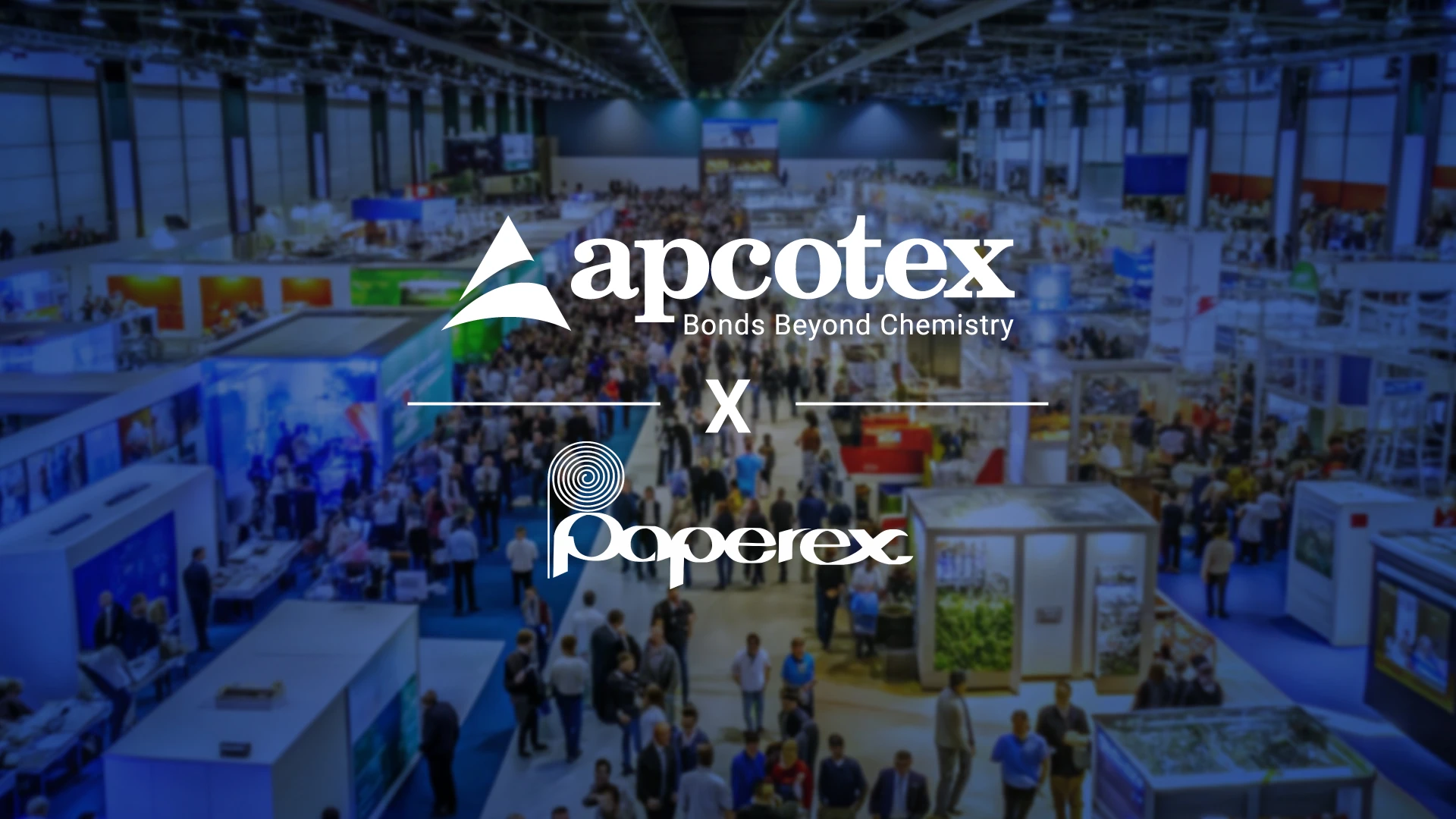
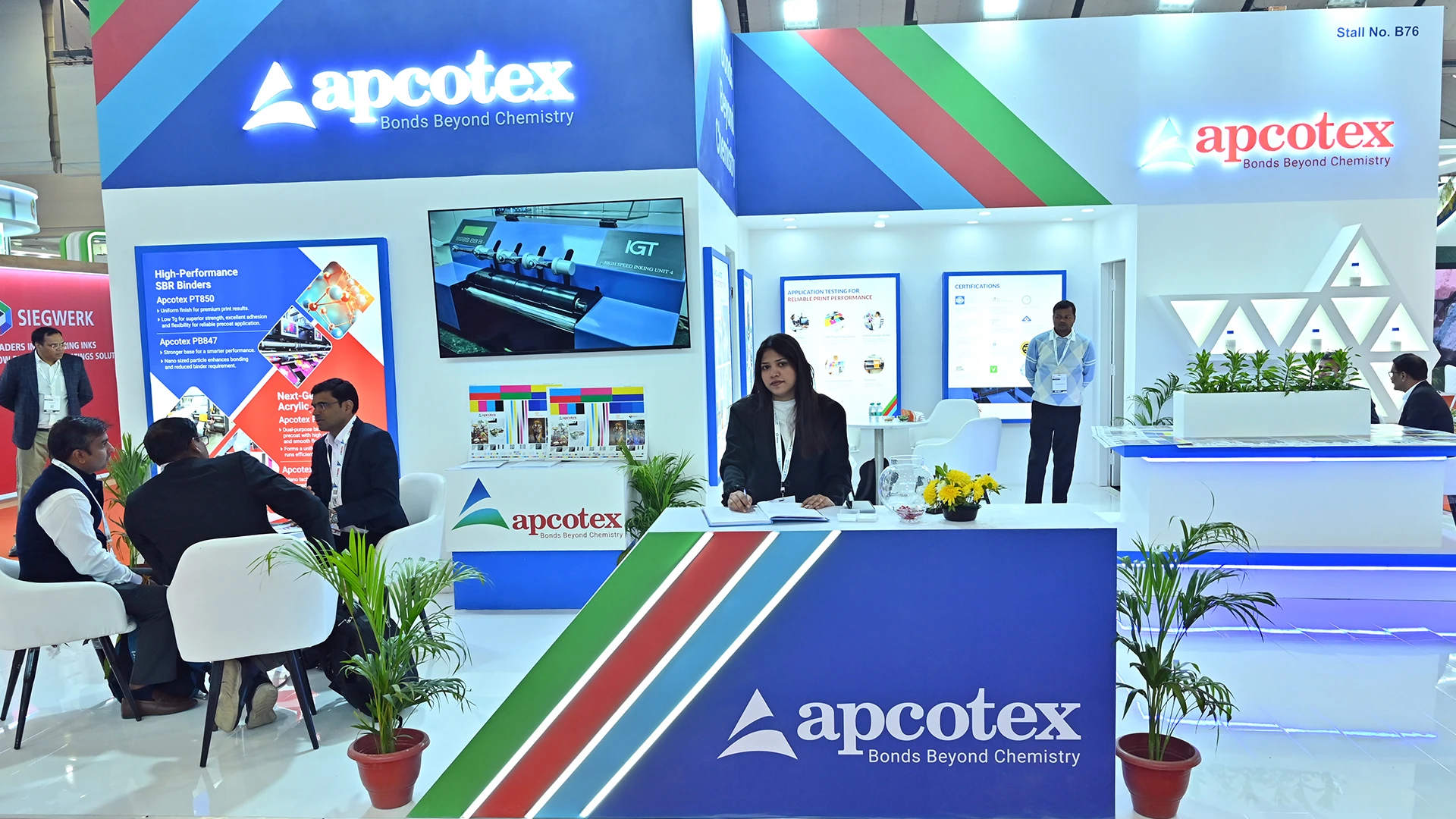
By the time Paperex 2025 arrived, Apcotex knew the terrain. This was their third time at the show. What changed this year was intent. A slightly larger stall, placed deep inside the exhibition hall, and one clear question guiding every decision:
“How do we make every square foot and every interaction count?”
The challenge went beyond how the stall looked. It was about behaviour. When you are not in a prime location, how do you make people pause, feel welcome, understand quickly, and stay engaged?
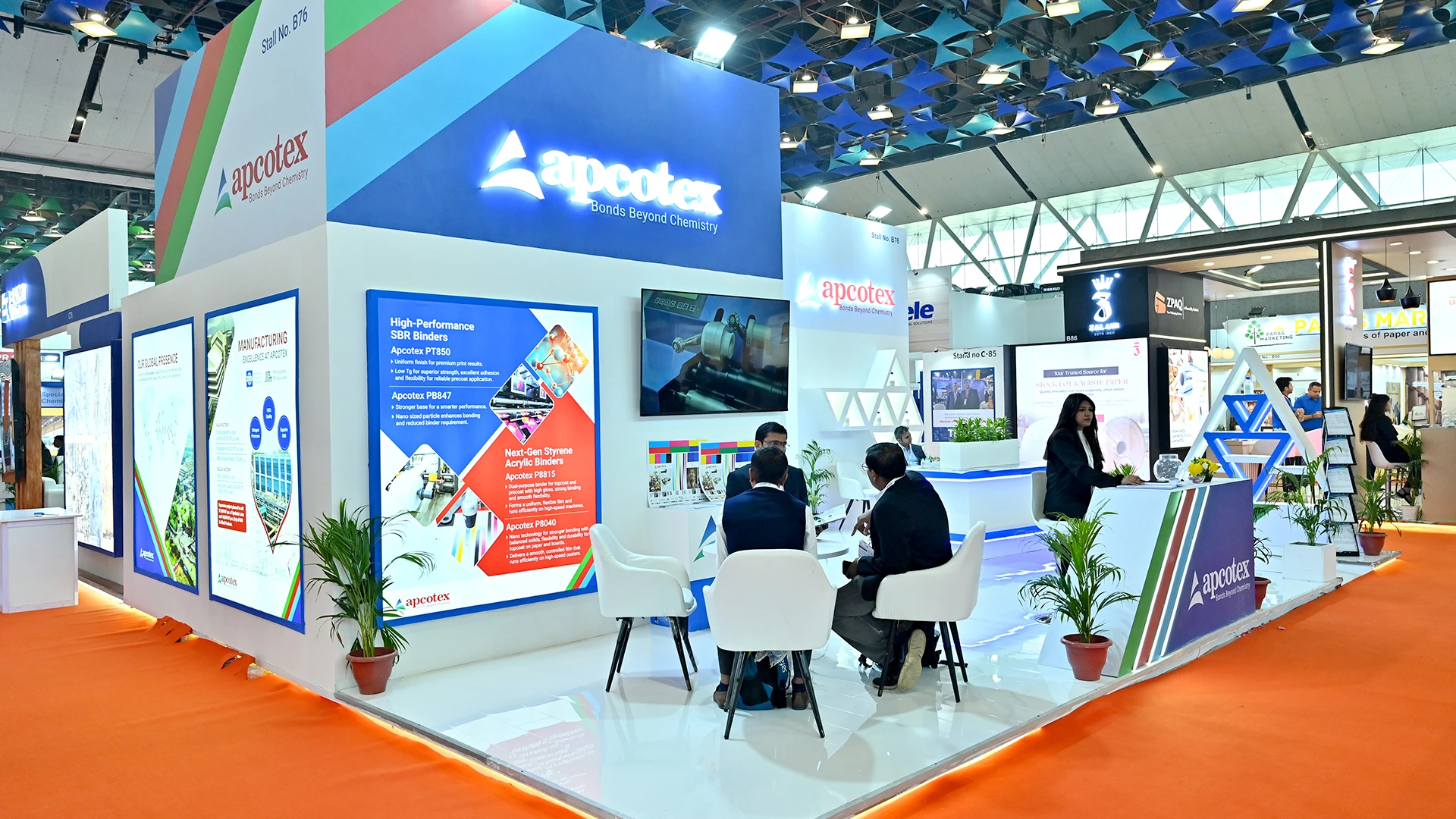
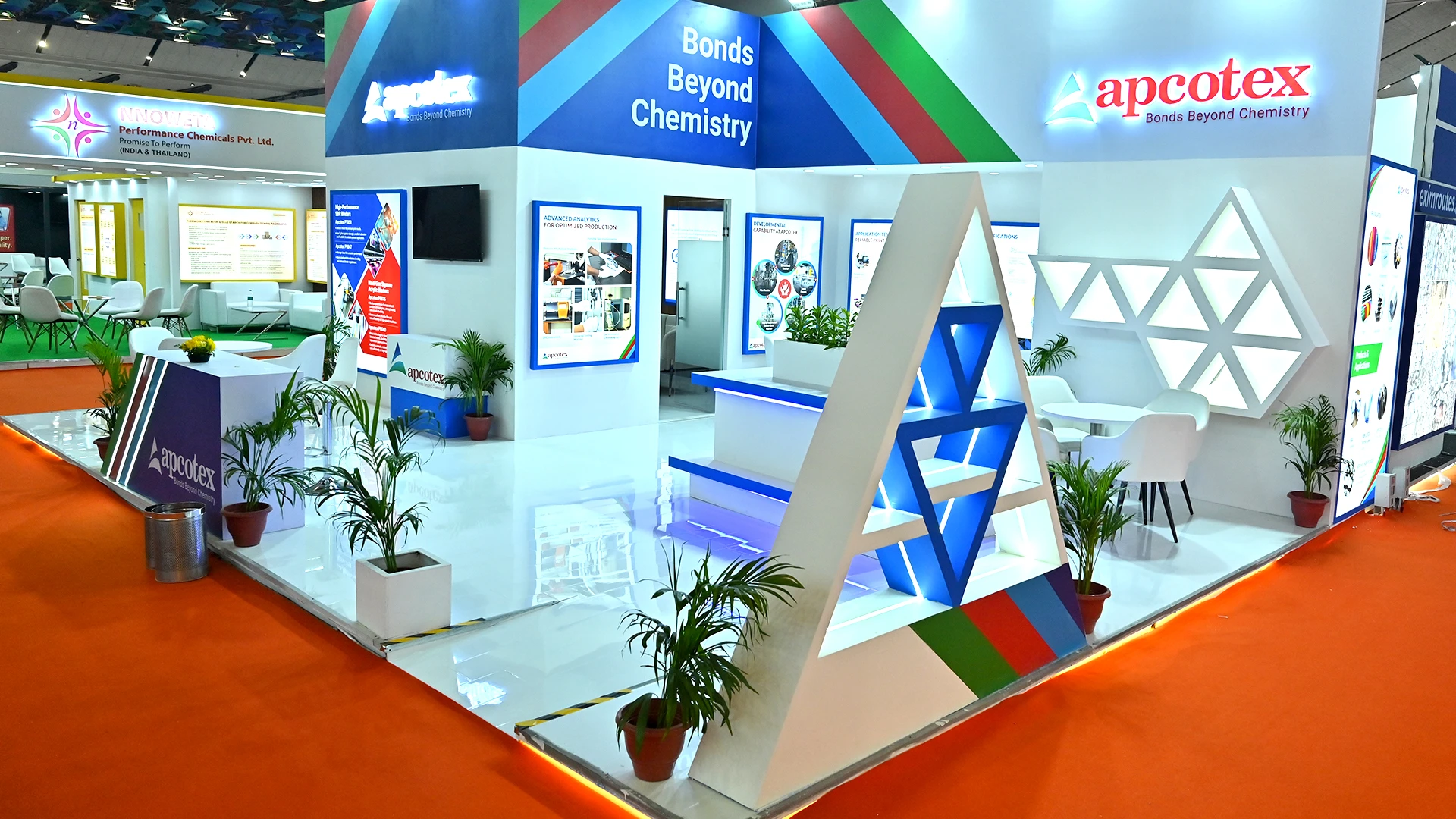
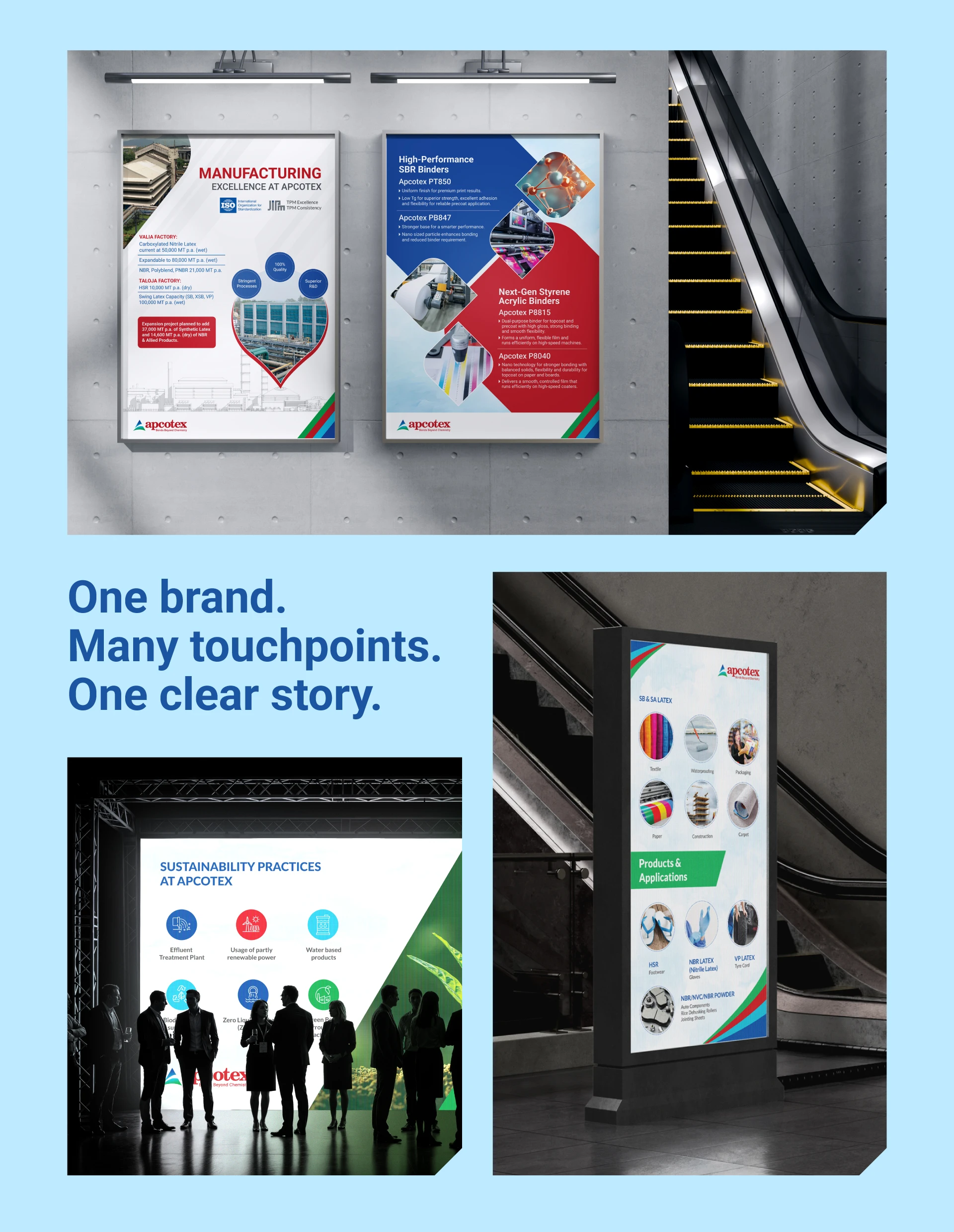
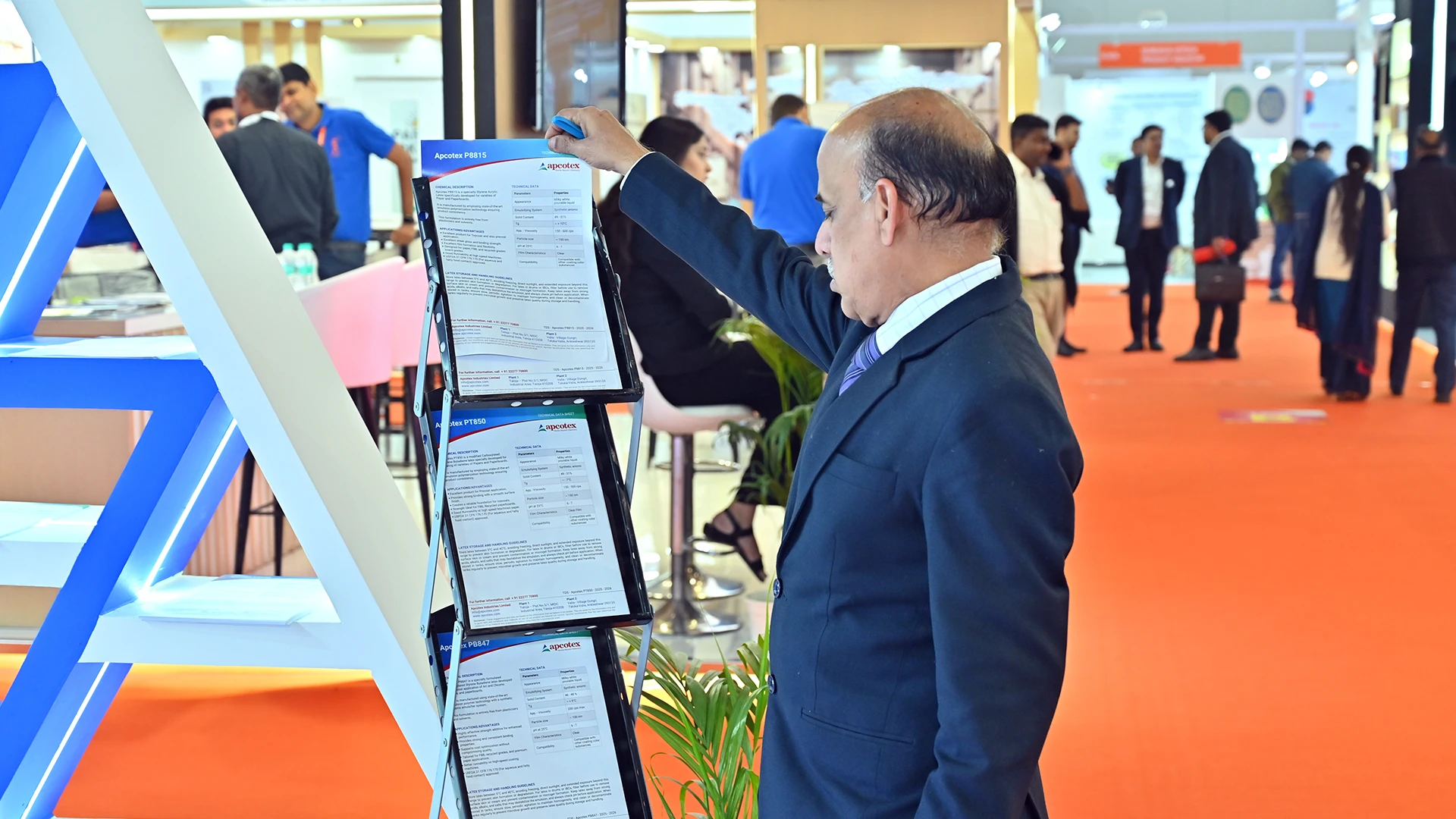
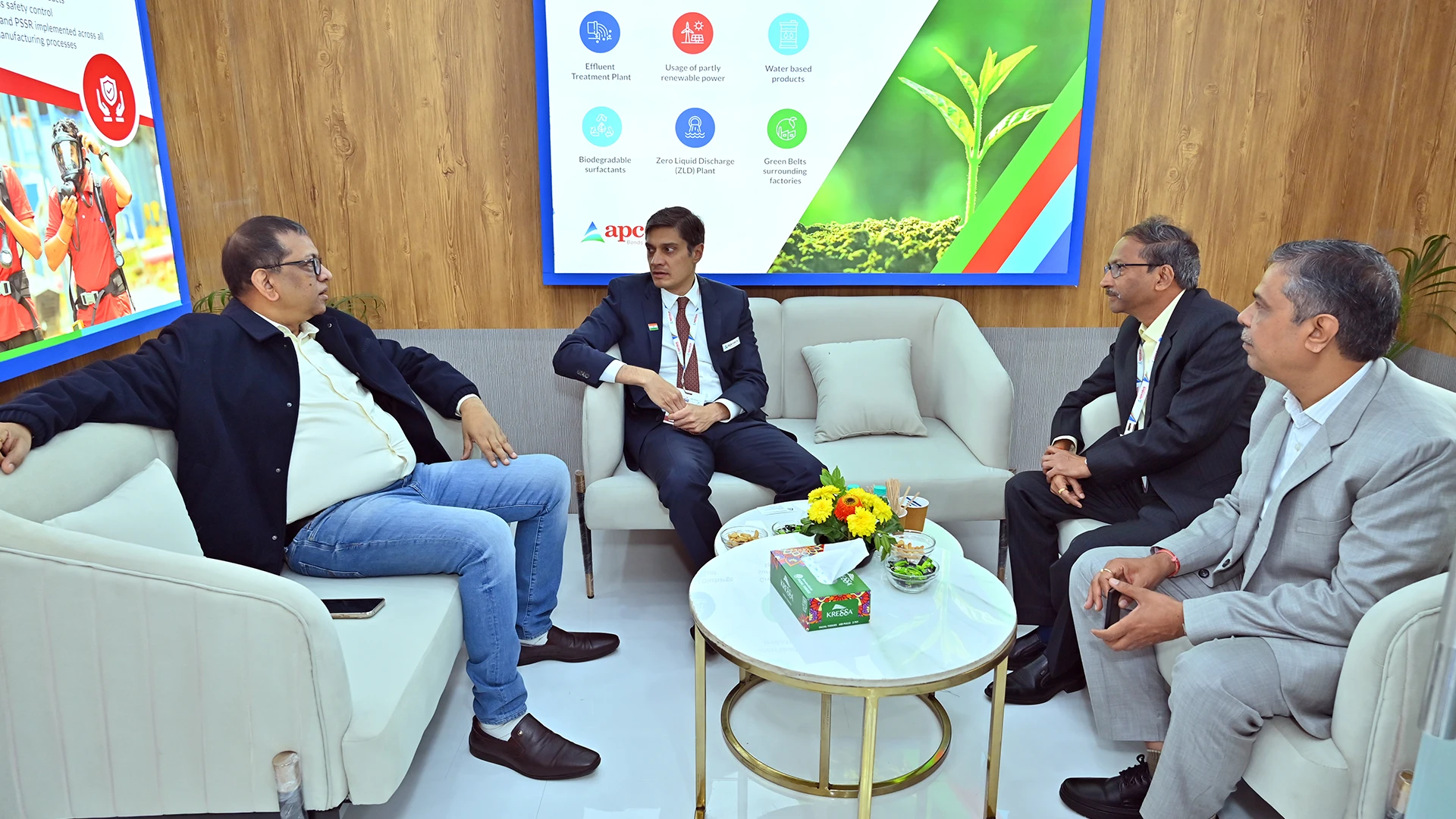
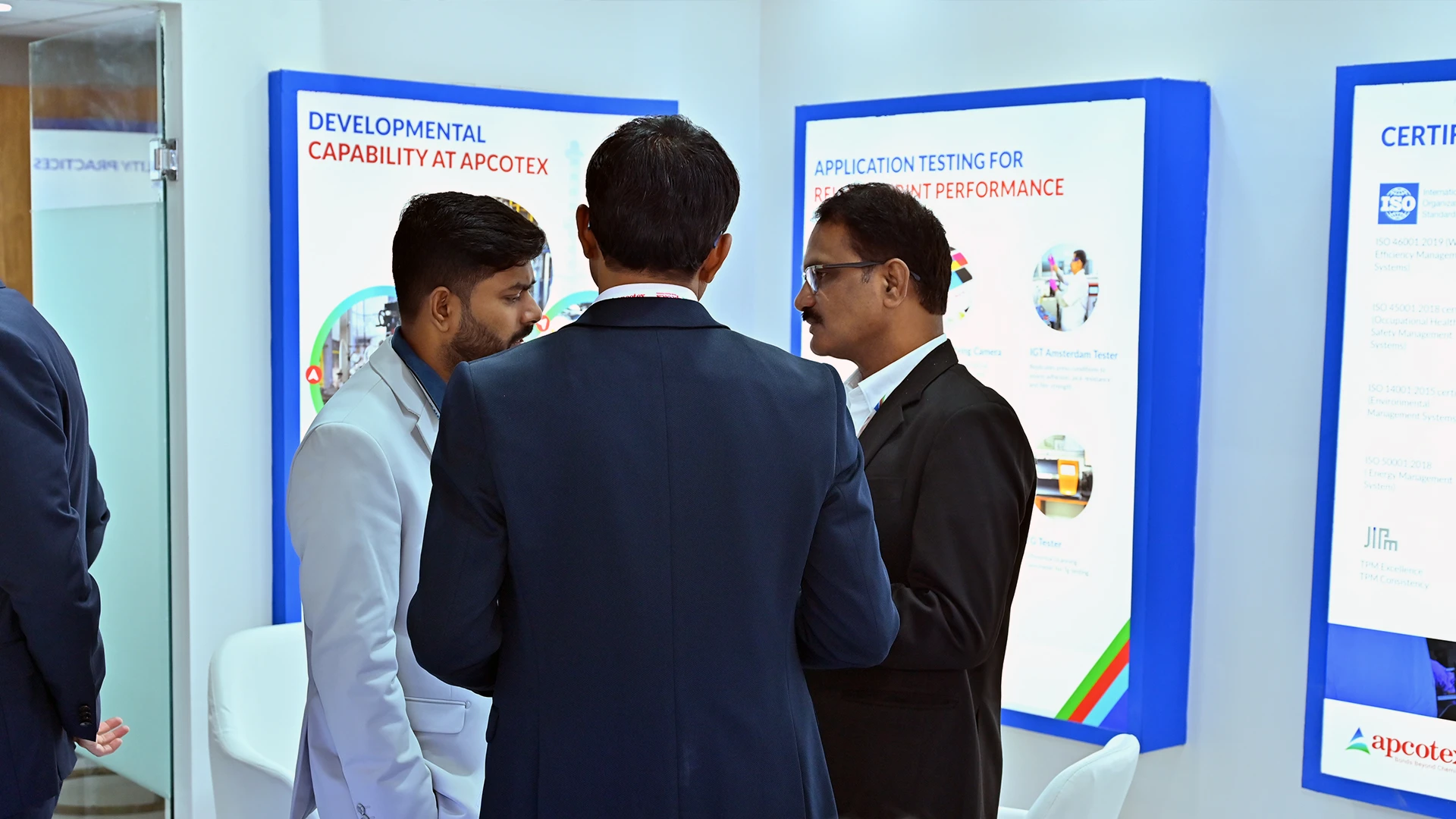
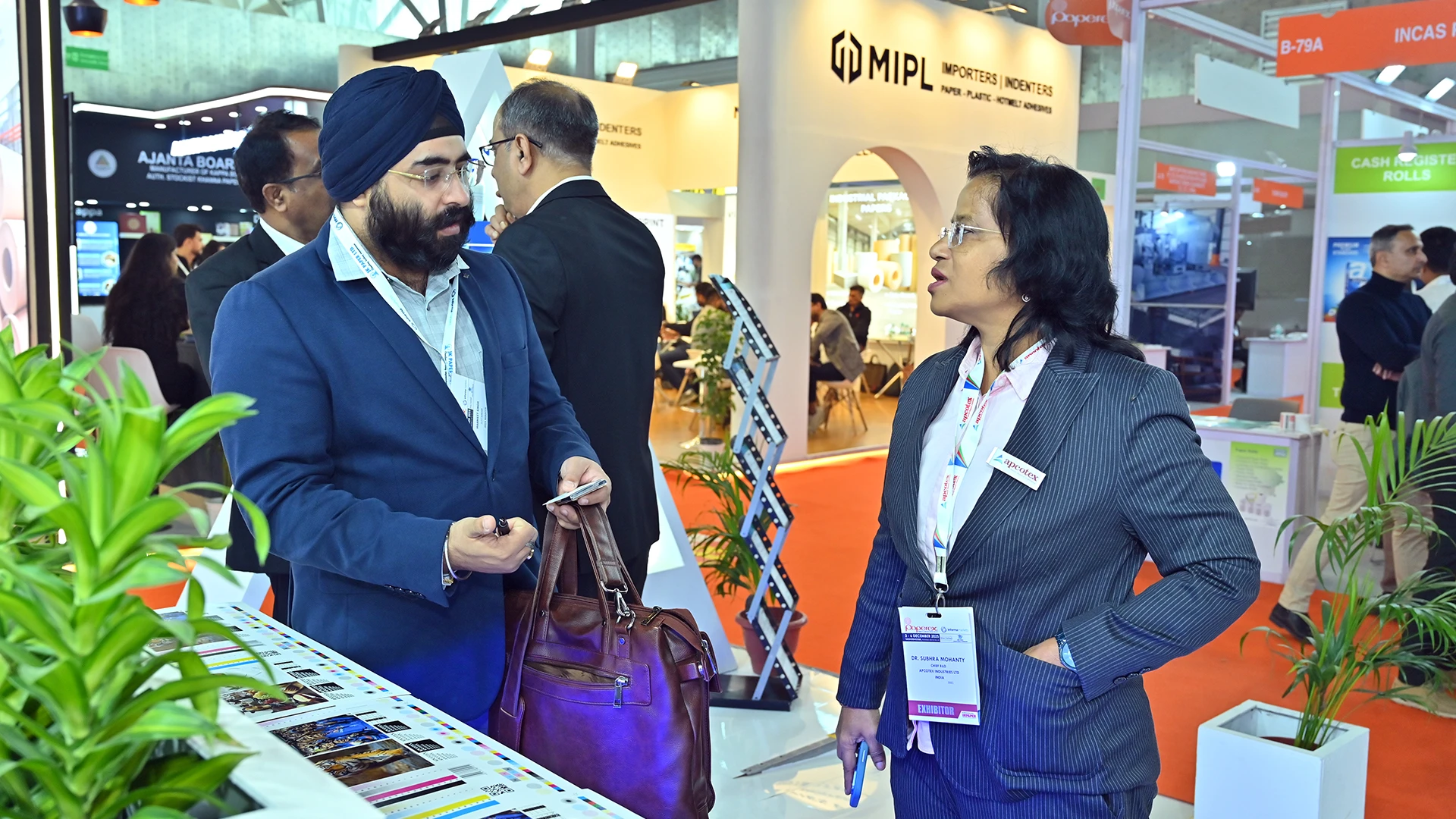
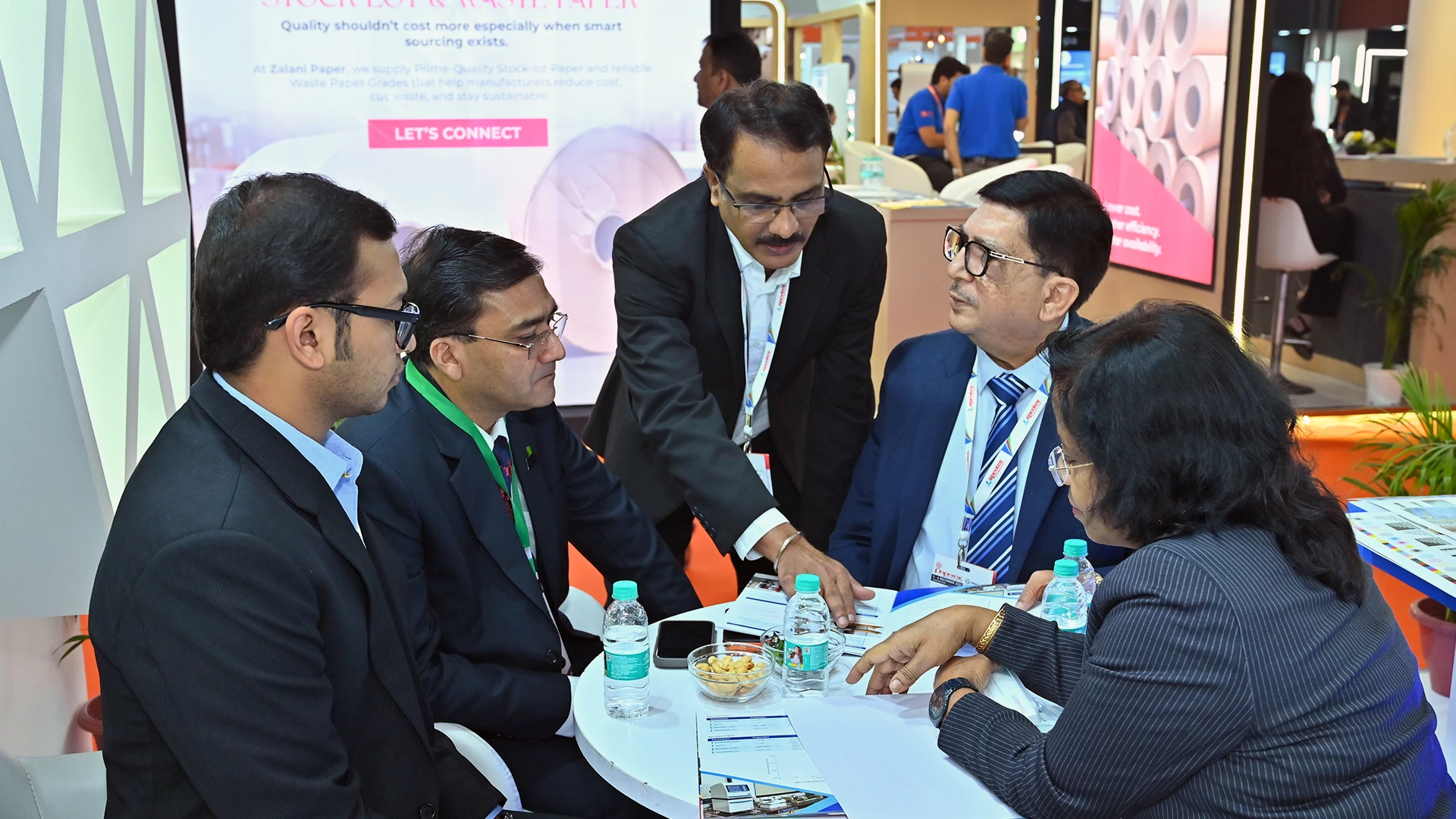
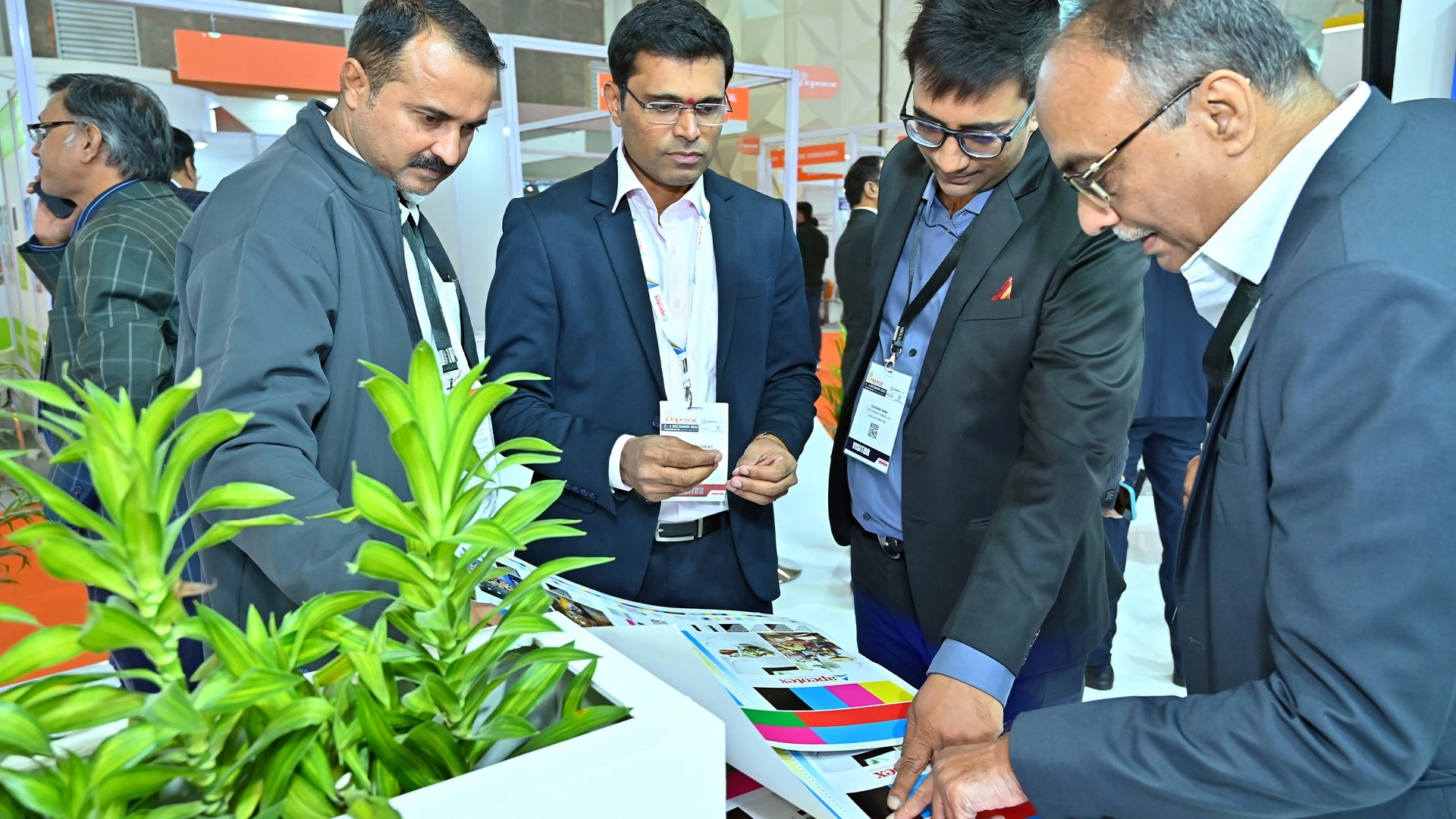
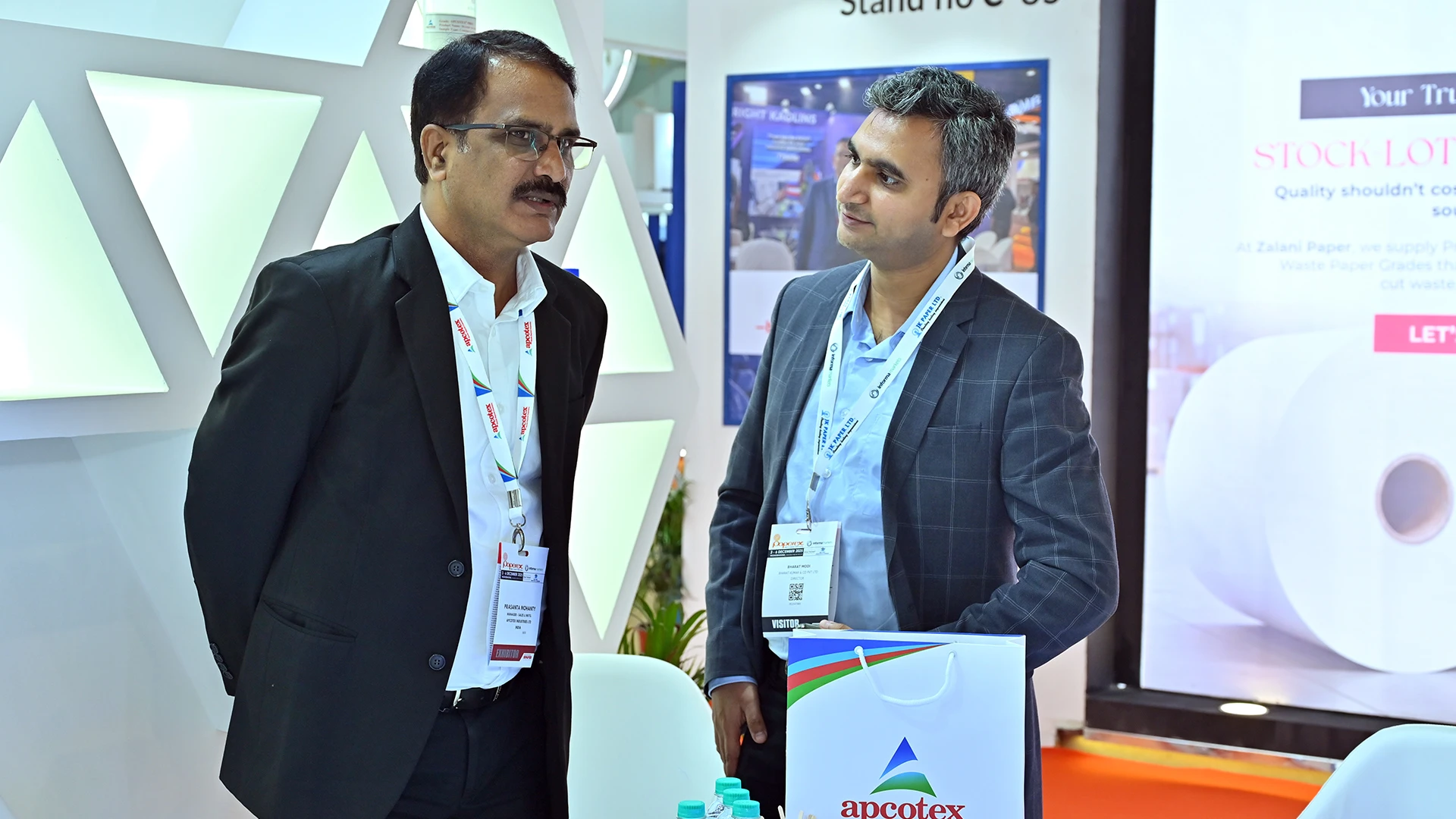
Building on Apcotex’s earlier rebrand, 9Point Design treated the stall as a communication system rather than a physical structure. Spaces were created for sitting, talking, and explaining. Posters were designed as prompts for conversation, not background visuals. One area introduced new products, another highlighted scale and capabilities, helping sales teams lead discussions naturally. Physical paper samples let visitors experience the end result, not just listen to technical details.
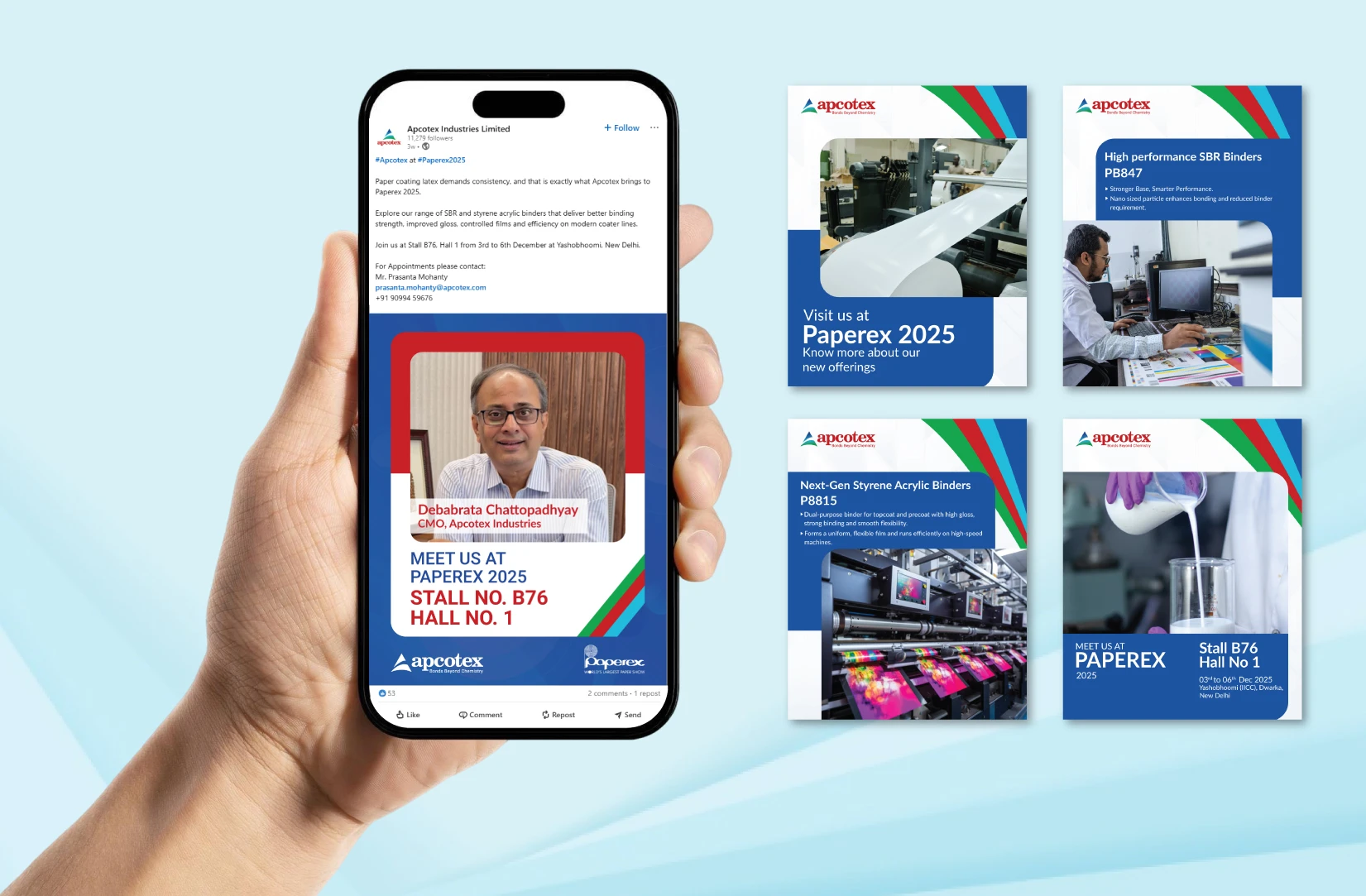
Before the event, personalised videos reached out to customers. On-ground visuals felt familiar because they echoed what people had already seen online. During the show, the stall stayed busy. After it ended, the story carried on.
Despite travel disruptions across the country, footfall stayed strong. The sales team barely found time to step away.
That’s what happens when design responds to real buyer questions, even before they are voiced.
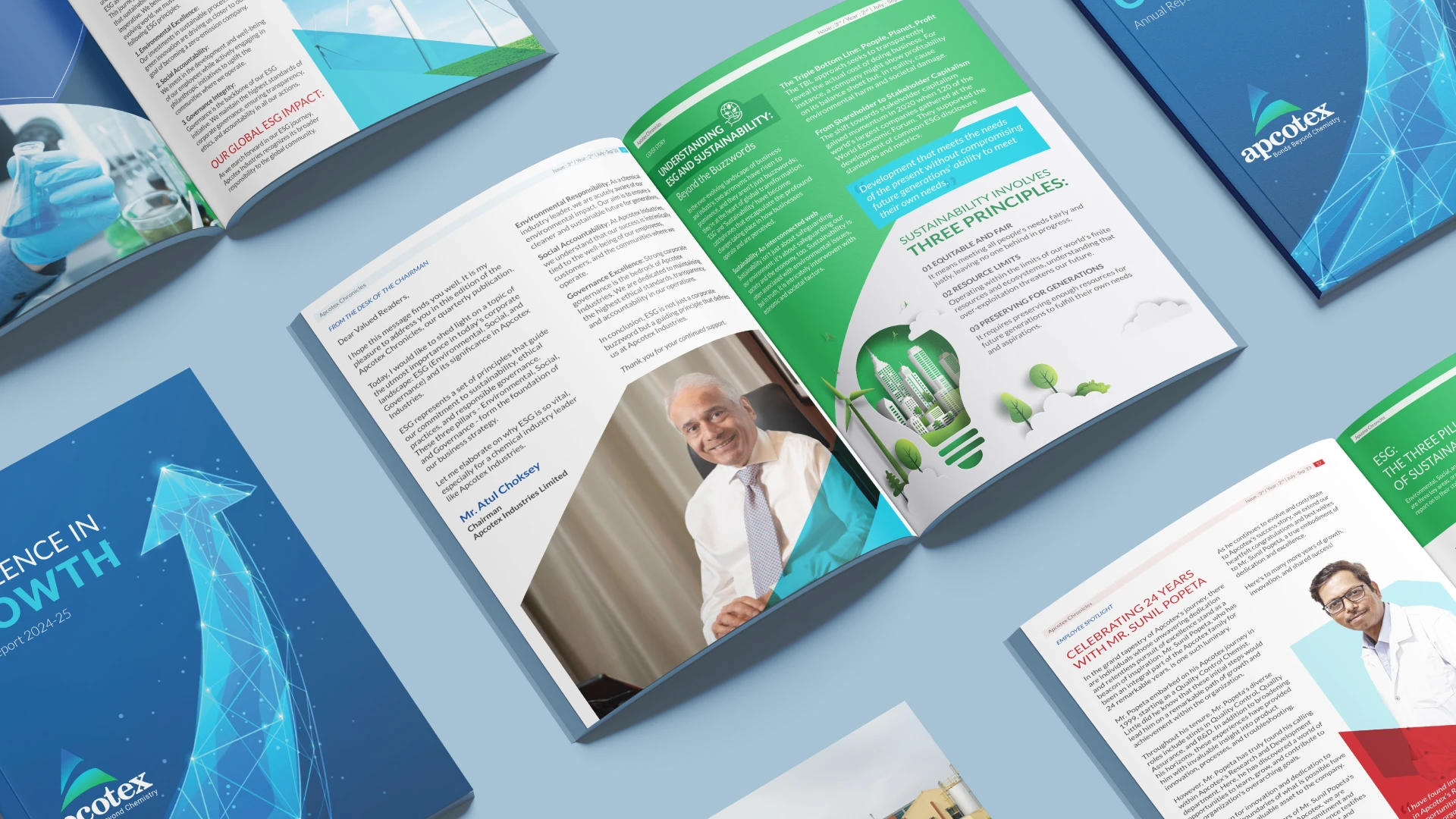
Scope: Event Strategy, Stall Design, Environmental Graphics, Print Collaterals, Brochures, Posters, Bags, Gift Articles, Technical Data Sheets, Pre-Event Videos, Social Media Content, On-Ground Communication Systems
Client: Apcotex Industries Ltd.
Industry: Synthetic Rubber and Performance Chemicals Manufacturing
Designed to support real conversations
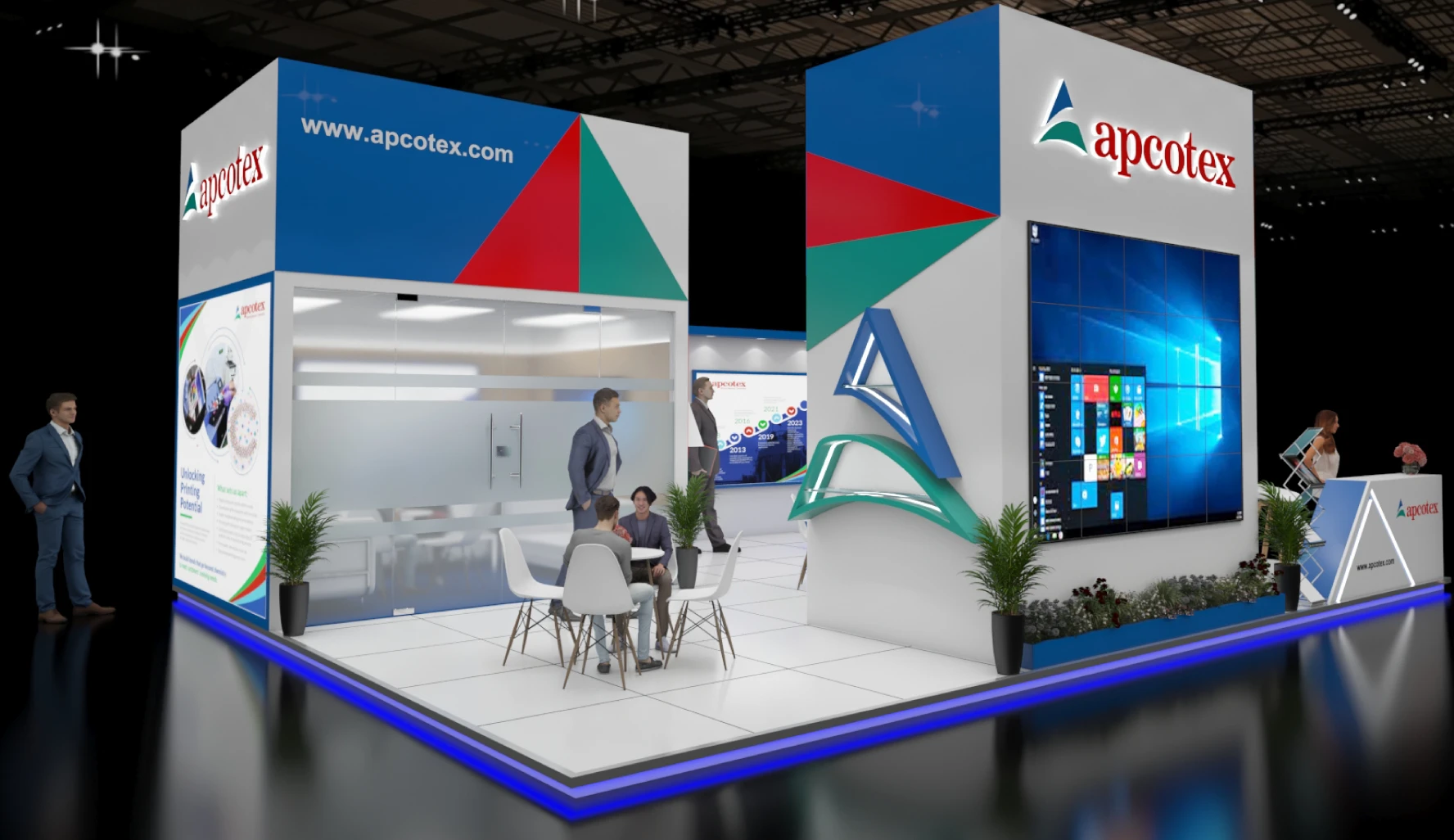
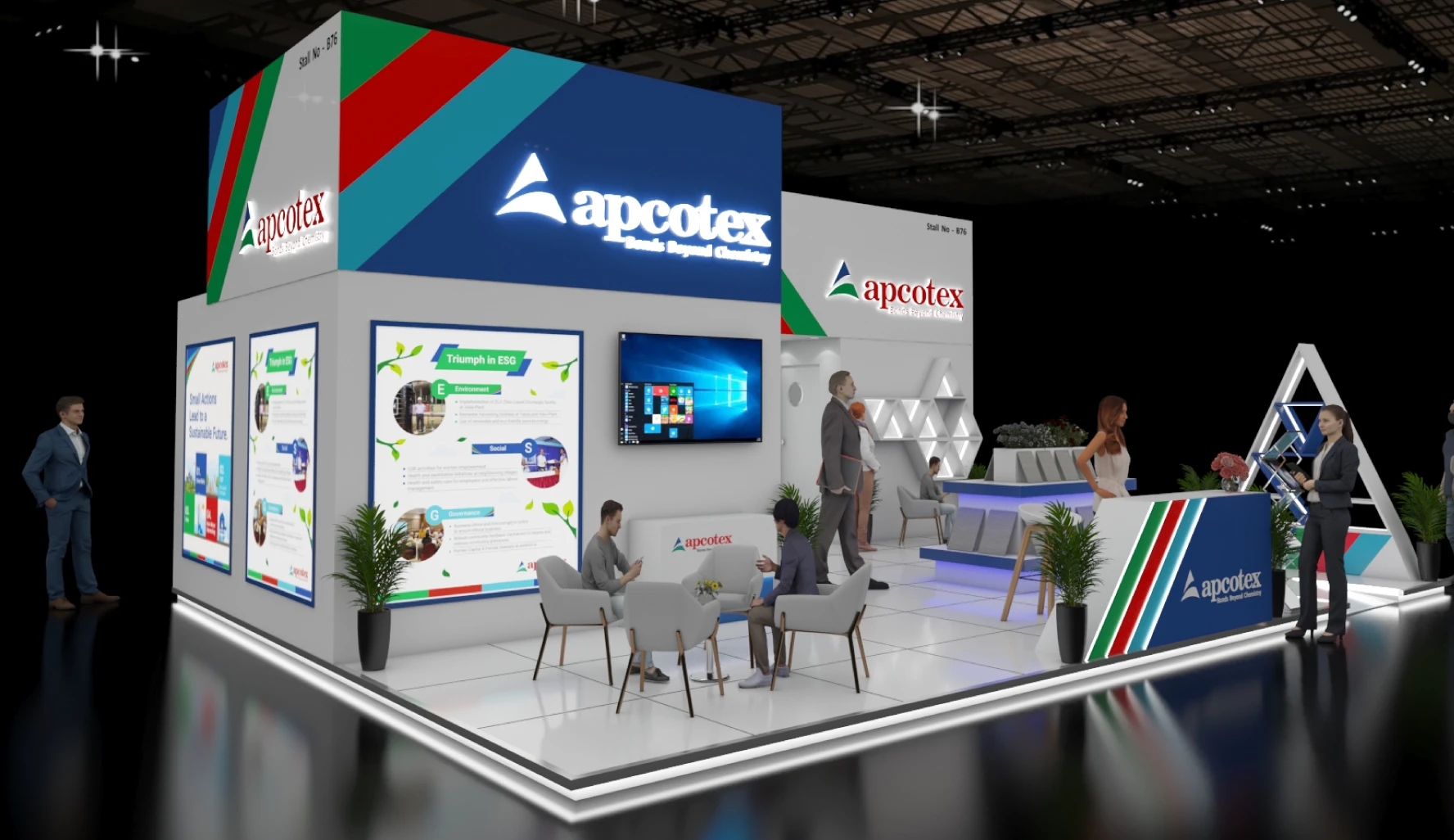
Before After
Building momentum before the first conversation
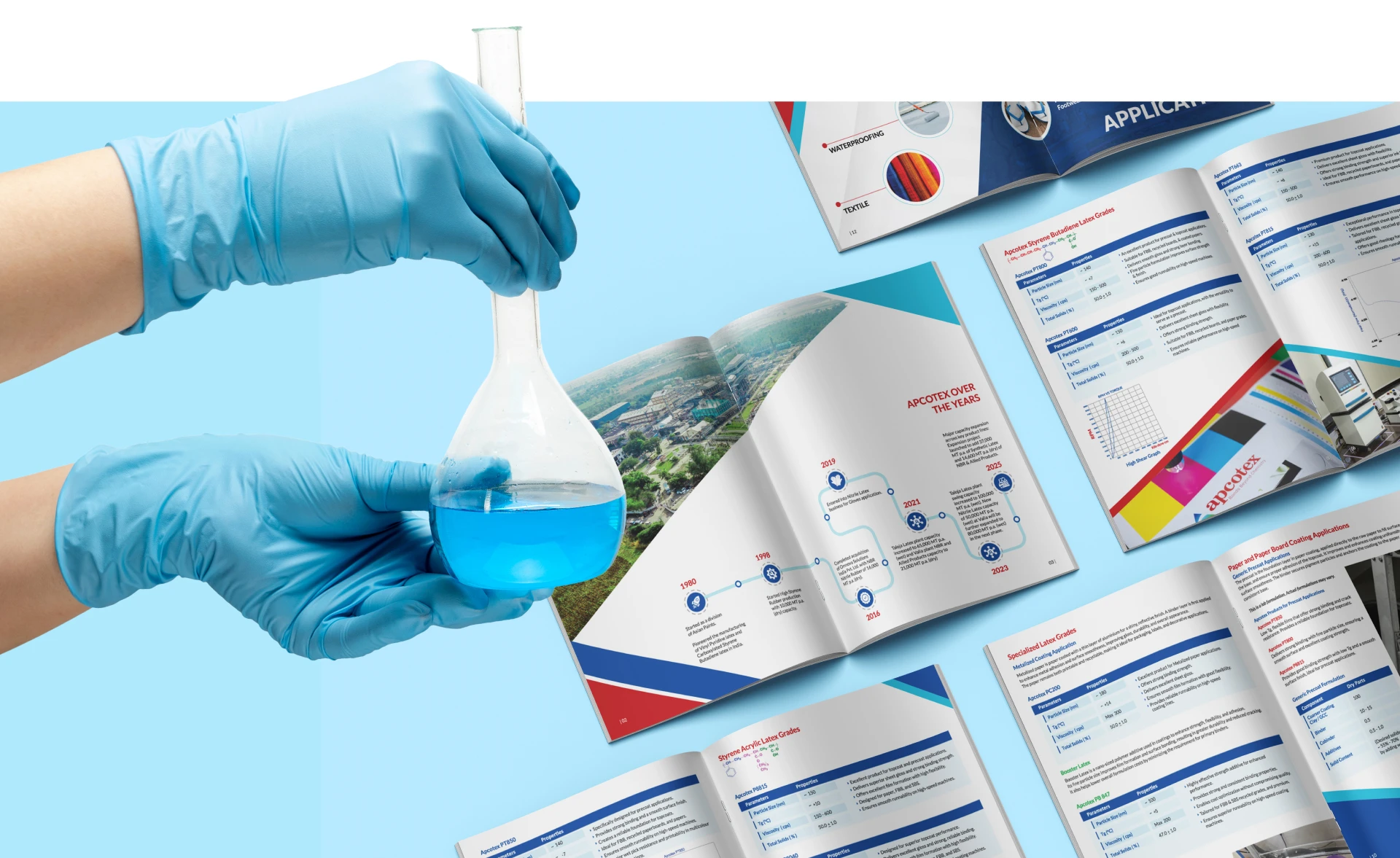
Equipping teams with the right tools
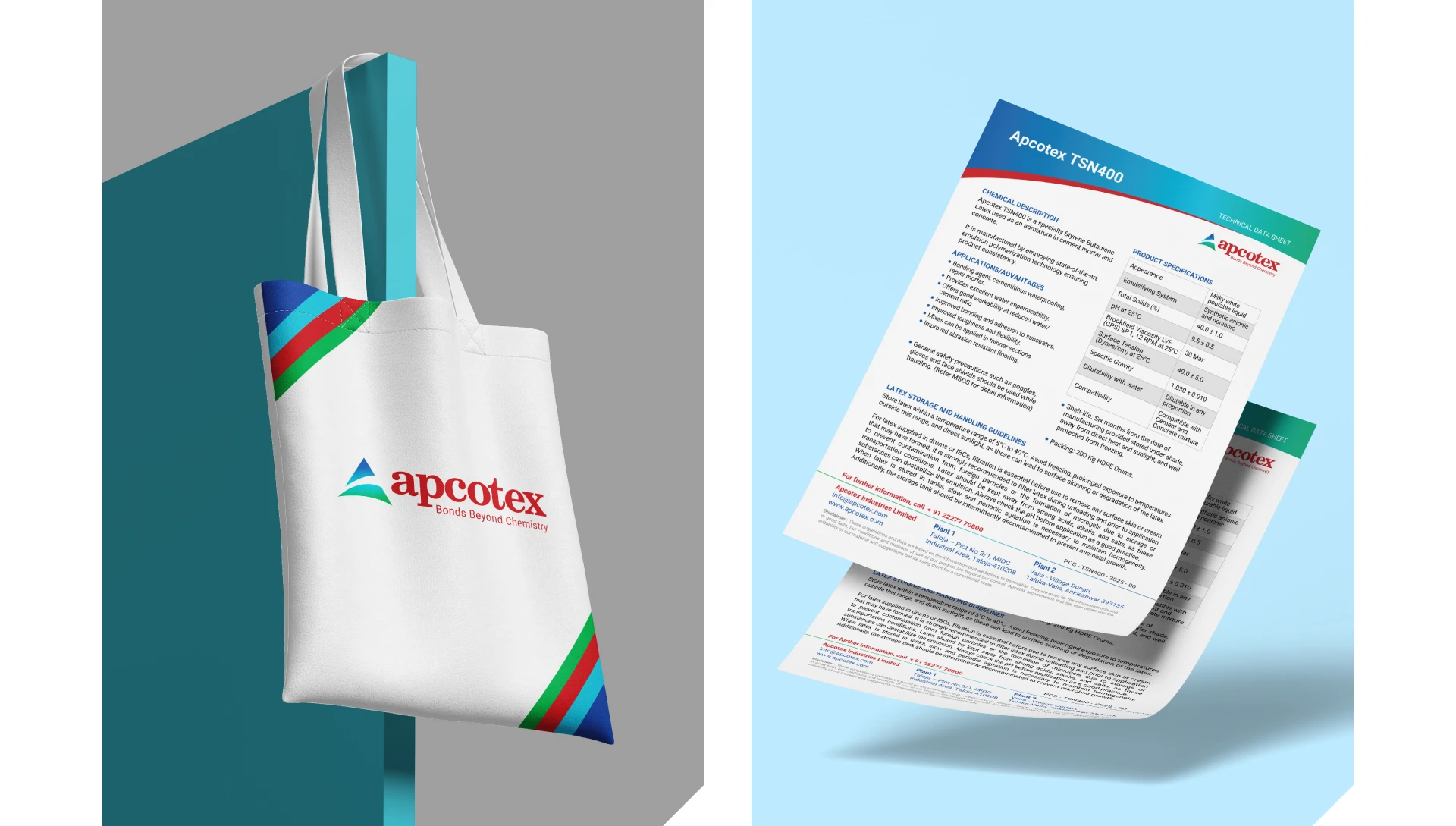
Visibility that extended beyond the stall
Where strategy translated into meaningful conversations
What was the main challenge for Apcotex at Paperex 2025?
Apcotex had to create strong visibility and engagement from a non-prime exhibition location. The challenge was not only to make the space look good, but to make visitors pause, understand the brand, and enter meaningful B2B conversations.
How did 9Point Design improve visibility for Apcotex at Paperex 2025?
9Point Design treated the exhibition space as a communication system. The design used clear zones, product posters, technical material, brand colours, pre-event social media, and on-ground messaging to create familiarity and guide visitor conversations.
How can B2B exhibition design support sales teams?
B2B exhibition design supports sales teams by giving them visual prompts, product stories, brochures, technical data sheets, and meeting spaces that make conversations easier. Good design reduces explanation fatigue and helps teams speak with more clarity.
Why are brochures and technical data sheets important in industrial exhibitions?
In industrial B2B sectors, buyers often need specifications, applications, performance details, and technical reassurance. Brochures and technical data sheets help sales teams support serious evaluation, not just casual interest.
What materials did 9Point Design create for Apcotex at Paperex 2025?
The scope included event strategy, stall design, environmental graphics, print collaterals, brochures, posters, bags, gift articles, technical data sheets, pre-event videos, social media content, and on-ground communication systems.
What can manufacturing and industrial companies learn from this case study?
Manufacturing and industrial companies can learn that trade show performance depends on more than booth size or location. Clear messaging, sales enablement, technical clarity, and consistent brand application can make the exhibition presence work harder.
Why does exhibition location matter in B2B trade shows?
In B2B trade shows, location can affect natural footfall. A prime location may bring visitors past the space more easily, while a low-visibility zone needs stronger communication, clearer messaging, and better spatial planning to earn attention.
What does “designing for conversations, not footfall” mean?
It means the goal is not just to attract people into a space. The goal is to help sales teams start better conversations, explain products faster, answer technical questions clearly, and move visitors from interest to evaluation.
What role did pre-event social media play in the Apcotex Paperex campaign?
Pre-event social media helped build familiarity before visitors arrived at the exhibition. Leadership-led video invites, product-led posts, and clear stall information made the on-ground experience feel connected to the digital communication visitors had already seen.
How did the stall design reflect Apcotex’s brand identity?
The stall applied Apcotex’s brand colours, shapes, visual hierarchy, and communication style across the space. This helped the exhibition presence feel consistent with the larger Apcotex brand, instead of looking like a one-off event setup.
What made this project different from regular exhibition stall design?
The work was not limited to layout and graphics. It connected pre-event marketing, brand identity, technical communication, sales collateral, visitor behaviour, and post-event recall into one coherent B2B brand experience.
How does B2B branding help in trade show performance?
B2B branding helps buyers understand who the company is, what it offers, why it is credible, and how to engage with the team. At a trade show, that clarity has to happen quickly because attention is limited and competition is visible.